


What Is AI-Artificial-Intelligence?
Artificial Intelligence, commonly known as AI, is a branch of computer science that focuses on creating machines capable of performing tasks that usually require human thinking. Instead of following fixed instructions, AI systems can learn from data, identify patterns, and improve their performance over time.
For example:
- Google Search understands your queries.
- Chat GPT answers questions naturally.
- Netflix recommends movies based on your interests.
- Amazon suggests products you may like.
- Google Maps finds the fastest route.
These are all examples of AI Artificial Intelligence in action.
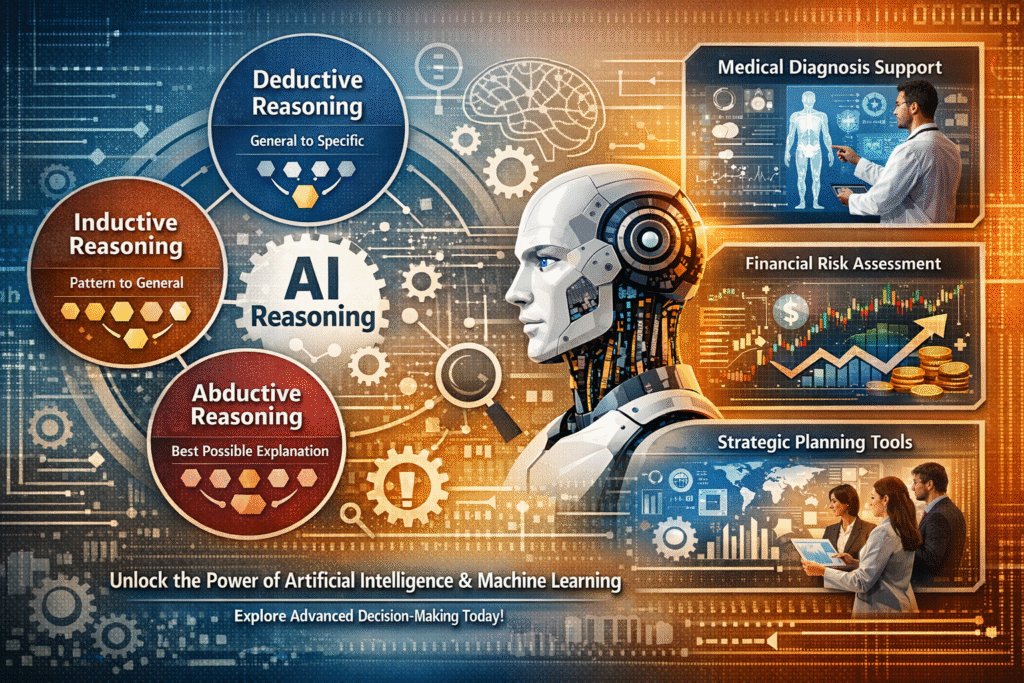
Brief History of AI Artificial Intelligence
Although AI- Artificial-Intelligence feels like a modern invention, its roots go back several decades.
- 1950: Alan Turing introduced the idea that machines could think.
- 1956: The term “AI Artificial Intelligence” was officially introduced.
- 1980s: Expert systems became popular.
- 2012: Deep Learning transformed AI Artificial Intelligence research.
- 2022–2026: Generative AI tools such as Chat GPT, Gemini, and Microsoft Copilot made AI accessible to everyone.
Today, AI is one of the fastest-growing technologies in the world.
How AI Artificial Intelligence Works
AI works by combining data, algorithms, and computing power. Instead of programming every possible answer, developers train AI systems using large amounts of information.
Machine Learning
Machine Learning allows computers to learn from data without being explicitly programmed. The more data they receive, the better they become at making predictions.
Example:
Email services automatically detect spam messages.
Deep Learning
Deep Learning is a more advanced form of Machine Learning that uses multiple neural network layers to process complex information.
Example:
Face recognition on smartphones.
Natural Language Processing (NLP)
NLP helps computers understand human language.
Examples include:
- Chat GPT
- Google Translate
- AI Artificial Intelligence Chatbots
- Voice assistants
Computer Vision
Computer Vision enables machines to understand images and videos.
Examples:
- Medical image analysis
- Self-driving cars
- Security cameras
- Facial recognition
Types of AI-Artificial-Intelligence
There are three main types of AI.
| Type | Description | Example |
|---|---|---|
| Narrow AI | Designed for one specific task | Siri, Alexa, Chat GPT |
| General AI | Human-level intelligence (still under development) | Future AI Systems |
| Super AI | Intelligence beyond humans (theoretical) | Not yet developed |
Most AI-Artificial-Intelligence applications today belong to Narrow AI.
Benefits of AI-Artificial-Intelligence
AI Artificial Intelligence offers many advantages across industries.
Faster Decision-Making
AI Artificial Intelligence processes huge amounts of information within seconds.
Increased Productivity
Businesses automate repetitive tasks, allowing employees to focus on important work.
Better Customer Experience
AI chatbots provide instant customer support 24/7.
Improved Healthcare
Doctors use AI-Artificial-Intelligence to detect diseases earlier and improve diagnosis.
Personalized Recommendations
Platforms like YouTube, Netflix, and Spotify recommend content based on user preferences.
Better Business Insights
Companies analyze customer behavior using AI-Artificial-Intelligence to improve marketing and sales strategies.
Real-Life Applications of
AI-Artificial-Intelligence
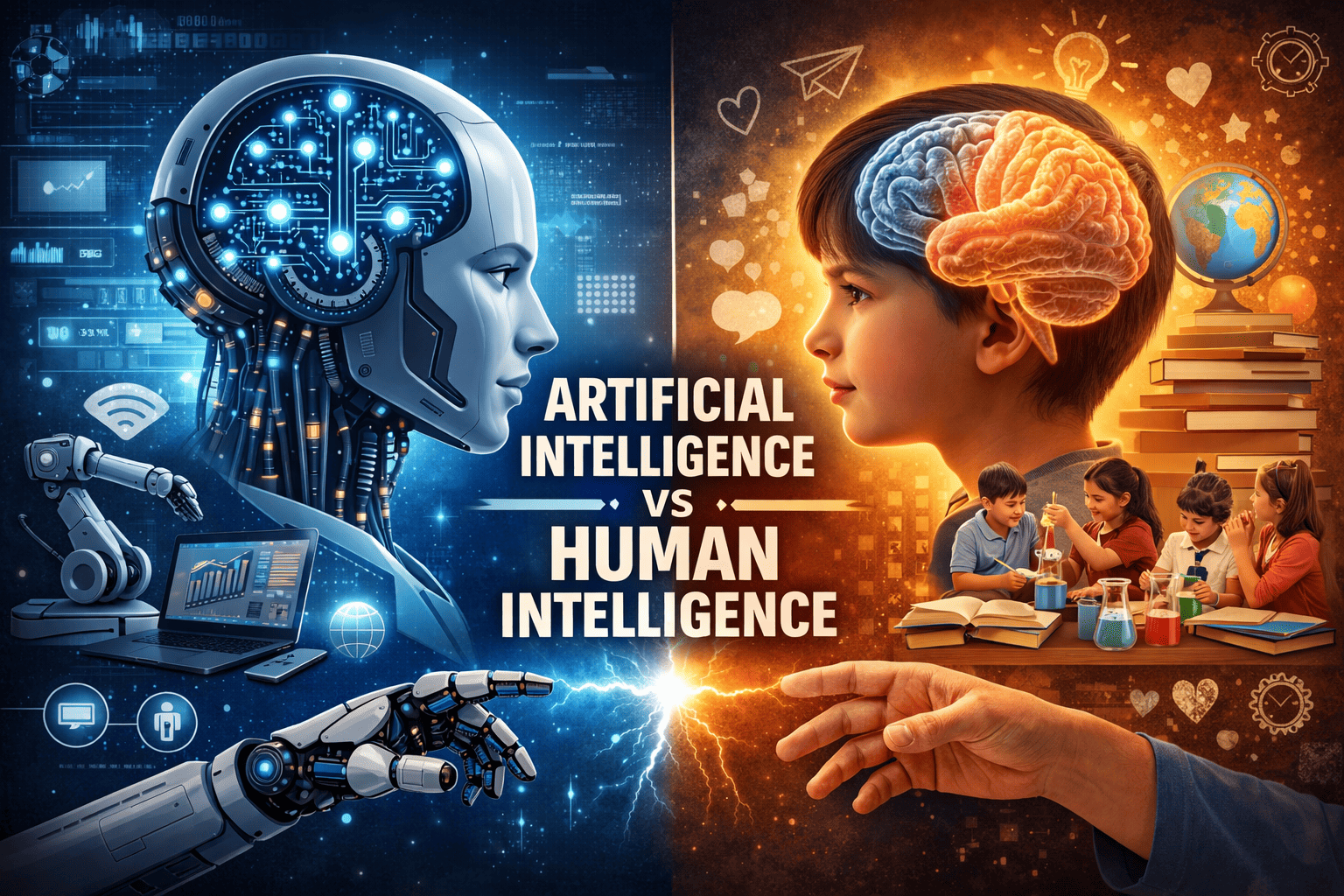
AI-Artificial-Intelligence is already transforming everyday life.
Healthcare
- Disease detection
- Medical imaging
- Drug research
- Virtual health assistants
Education
- Personalized learning
- AI-Artificial-Intelligence tutors
- Automatic grading
- Smart classrooms
Finance
- Fraud detection
- Risk analysis
- Investment prediction
- Online banking security
Marketing
- Customer segmentation
- Content creation
- SEO optimization
- Personalized advertising
Manufacturing
- Predictive maintenance
- Quality inspection
- Industrial robots
Transportation
- Navigation systems
- Self-driving vehicles
- Traffic management
AI-Artificial-Intelligence vs Machine Learning
| Artificial Intelligence | Machine Learning |
|---|---|
| Broad concept | Subset of AI |
| Simulates human intelligence | Learns from data |
| Includes reasoning and planning | Focuses on predictions |
| Can include rule-based systems | Requires training data |
Machine Learning is one part of AI-Artificial-Intelligence, but AI includes many other technologies as well.
Future of AI-Artificial-Intelligence
The future of AI Artificial Intelligence looks incredibly promising.
Over the next few years, AI Artificial Intelligence is expected to play a major role in:
- Healthcare innovation
- Smart cities
- Robotics
- Autonomous vehicles
- Education
- Cybersecurity
- Business automation
- Scientific research
Generative AI, AI Artificial Intelligence agents, and intelligent automation will continue to reshape industries worldwide. However, responsible AI development will remain essential to ensure fairness, privacy, and transparency.
Expert Tip
Don’t rely on AI Artificial Intelligence blindly. Use it as a tool to enhance your creativity and productivity, but always verify important information with trusted sources.
Key Takeaways
- AI Artificial Intelligence enables machines to perform tasks that typically require human intelligence.
- AI uses technologies such as Machine Learning, Deep Learning, Natural Language Processing, and Computer Vision.
- Most AI-Artificial-Intelligence systems available today are examples of Narrow AI.
- AI improves efficiency, decision-making, customer experience, and innovation across industries.
- Learning AI skills can open up exciting career opportunities in the future.
Frequently Asked Questions (FAQs)
1. What Is AI-Artificial-Intelligence?
Artificial Intelligence (AI) is a branch of computer science that enables machines to perform tasks that usually require human intelligence, such as learning, problem-solving, decision-making, language understanding, and image recognition.
2. How does AI-Artificial-Intelligence work?
Artificial Intelligence works by using algorithms, data, and computing power. AI systems learn from large datasets, identify patterns, and make predictions or decisions without being explicitly programmed for every task.
3. What are the main types of Artificial Intelligence?
The three main types of Artificial Intelligence are Narrow AI, General AI, and Super AI. Today, most AI applications, including virtual assistants and chatbots, fall under Narrow AI.
4. What is the difference between AI-Artificial- Intelligence and Machine Learning?
Artificial Intelligence is the broader concept of creating intelligent machines, while Machine Learning is a subset of AI that enables systems to learn from data and improve their performance over time.
5. Where is Artificial Intelligence used in everyday life?
Artificial Intelligence is used in smartphones, voice assistants, search engines, online shopping, healthcare, banking, education, transportation, customer service, and social media platforms.
6. What are the benefits of Artificial Intelligence?
Artificial Intelligence improves productivity, automates repetitive tasks, enhances customer experiences, supports faster decision-making, reduces human errors, and helps businesses analyze data more efficiently.
7. Is AI-Artificial Intelligence safe to use?
Yes, Artificial Intelligence is generally safe when developed and used responsibly. However, organizations should address challenges such as data privacy, security, bias, and ethical concerns to ensure trustworthy AI systems.
8. Can AI-Artificial-Intelligence replace human jobs?
Artificial Intelligence can automate certain repetitive tasks, but it is more likely to transform jobs rather than replace all workers. It also creates new career opportunities in AI development, data science, cybersecurity, and automation.
9. How can beginners learn AI-Artificial- Intelligence?
Beginners can start by learning Python programming, understanding the basics of Machine Learning, exploring online AI courses, working on practical projects, and using AI tools like Chat GPT and Google Gemini.
10. What is the future of AI-Artificial-Intelligence?
The future of Artificial Intelligence includes smarter AI assistants, autonomous vehicles, advanced healthcare solutions, intelligent robotics, business automation, and personalized digital experiences. AI is expected to play an even bigger role in everyday life over the next decade.
Conclusion
If you’ve been asking What Is AI-Artificial-Intelligence, the answer is simpler than it may seem.AI-Artificial-Intelligence, is the science of creating intelligent machines that can learn, solve problems, and assist humans in a wide range of tasks. From healthcare and education to finance, marketing, and entertainment, Artificial Intelligence is already making a significant impact on our daily lives.
As AI continues to evolve, understanding its capabilities and limitations will become increasingly important. Whether you want to build a career in technology, grow your business, or simply stay informed, learning about AI is a valuable investment. By using AI responsibly and ethically, we can unlock its full potential while creating a smarter and more innovative future.